Pay Attention to BTUs When Buying a Fireplace
Several factors come into play when shopping for a new fireplace or free-standing stove. The unit’s BTU output is one of the most important factors, particularly if you want your new appliance to be a significant heater.
Smokestacks of Milwaukee, WI, would like to provide you with helpful information about BTUs, including what the term means, how BTUs measure heat, and factors that can affect the amount of heat a unit produces.
British Thermal Unit
BTU stands for British Thermal Unit, a unit of measurement that indicates how much heat a particular fuel produces. You’ll see a BTU level listed in the specs and product literature for manufactured fireplaces and heating stoves.
A general rule of thumb is that the higher the BTU rating, the more heat the appliance produces, and vice versa. Along with BTU levels, most heating appliance literature delineates the optimal living space size they’re designed to heat. This makes it fairly easy to buy the right-sized appliance for your home.
How heating can be affected
Remember: BTU measures heat produced by a fuel source (such as wood logs or natural gas). It doesn’t necessarily guarantee how much heat you’ll feel inside your home. Several things can influence this.
Home insulation
A well-insulated home without gaps around windows and doors will retain more heat from a fireplace than a home with very old insulation and numerous cracks and gaps that let in cold air. The fireplace’s fuel will burn at its stated BTU level, but the heat will dissipate quickly as it moves into the house.
Type of firewood
Hardwoods like oak and maple burn hotter than pine, juniper, and other softwoods. The BTU rating on a wood-burning fireplace shows the heat level the appliance can produce at its optimal efficiency, but the type of wood you use will affect that level.
Size of the log stack or gas flames
A greater number of burning logs and higher gas flames will create more heat in a fireplace or stove. Your hearth store staff or fireplace installer will guide you on how much heat your specific appliance can safely produce. Excess wood or gas heat can damage a heating unit and create unsafe operating conditions.
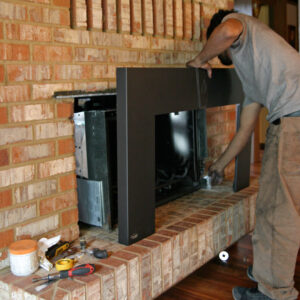 Fireplace design
The type of fireplace you have will play a big role in how much heat you can get from it. For example, traditional masonry fireplaces aren’t good home heaters because their open design allows up to 90% of the heat to be lost up the chimney.
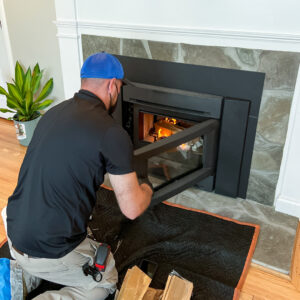
Manufactured fireplaces, which operate on a closed-combustion system, are far better at retaining their heat and sending it into the room. Fireplace inserts installed in masonry fireboxes also retain heat very well.
Choosing the fireplace or stove that’s right for your home
In the Milwaukee, WI, area, homeowners count on the experts at Smokestacks to help them select the best new fireplace or stove for the heat they need during our brutal winters. We sell and install premier manufactured fireplaces, heating stoves, and fireplace inserts that run on either gas or wood.
Let us help you make an excellent choice. Call us to learn more, or reach out through our contact form.